
2026 October 25
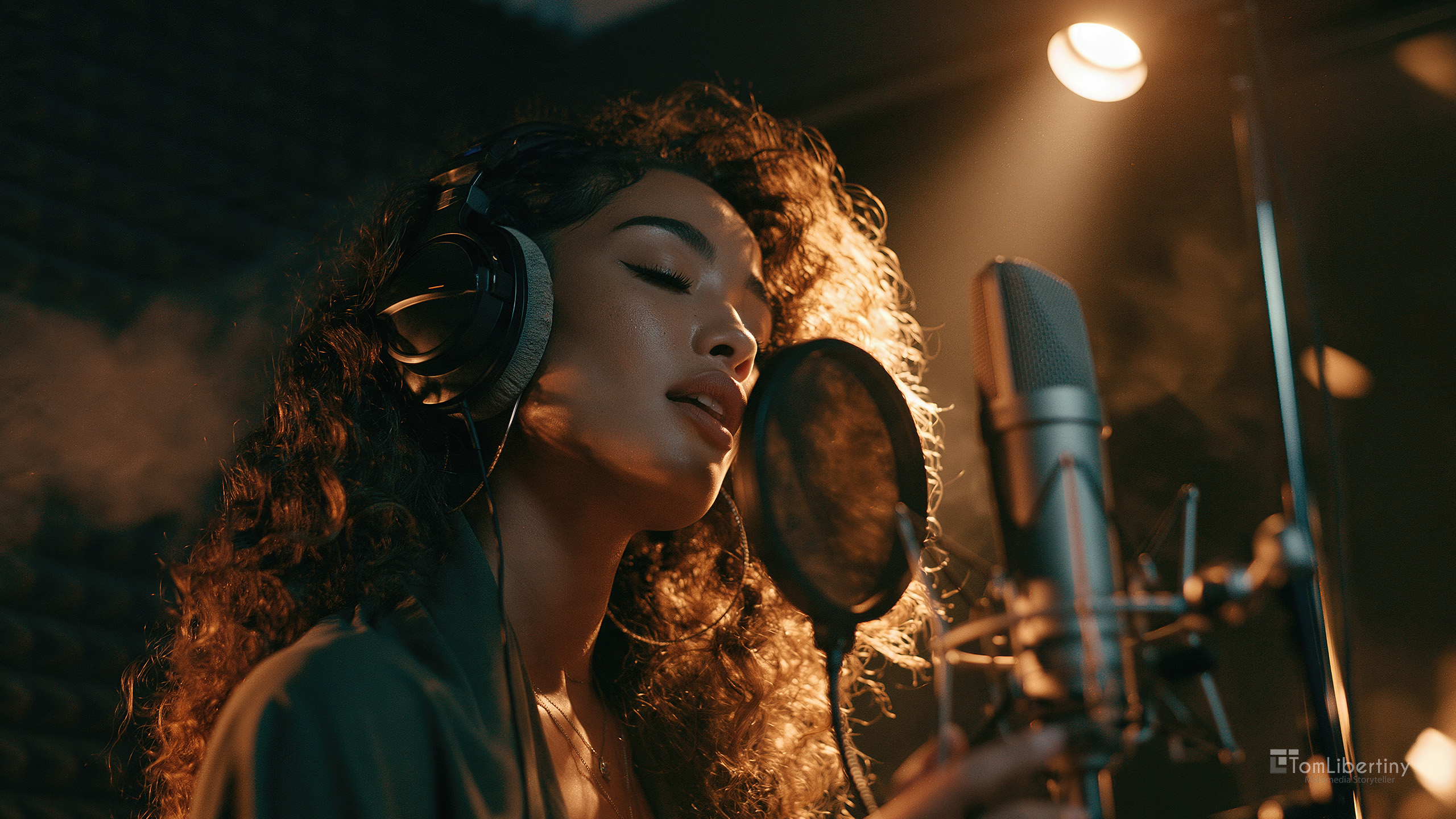
I recently finished recording “Depression,” the sixth of ten songs for Victoria and Seth, the third concept album in the world of Null Paradox, an interactive rock opera I’ve been developing for years.
The album explores ten stages of grief, an expansion of the work of Elisabeth Kübler-Ross and David Kessler. It follows two lovers, Victoria and Seth, through the experience of loss and its aftermath.
For me, the subject is personal. I experienced grief during the life and death of my parents and in-laws. Writing this album has been one way of exploring that experience through fictional characters.
It has taken nearly a decade to get this far. Life intervened. The work demanded time. And while I was writing and recording it, the economics of recorded music continued to change beneath my feet.
I used to sell physical CDs to an audience that included more than ten thousand people on my email list. Some listeners bought multiple releases and returned for more. There was a direct relationship between creating music and the people who wanted to own it.
Today, writing a song still takes time. Recording, mixing, and mastering can cost thousands of dollars. At an illustrative streaming royalty rate of four-tenths of a cent per play, a recording costing thousands of dollars would need approximately 1.5 million streams to recover that expense, before accounting for the time spent composing it.
The Arithmetic is Simple. The Implications are Not
In 1955, a listener could buy a seven-inch, 45 RPM single for $0.89. Contemporary reporting in Billboard, Cash Box, and The New York Times documented record prices of the period. Russell Sanjek’s American Popular Music and Its Business: The First Four Hundred Years, Volume III provides a historical account of manufacturing costs.
If manufacturing represented 15% of the retail price, approximately $0.76 remained from an $0.89. Divide that between the two songs on the record and the result is about $0.38 cents per song. Adjusted for inflation, that is roughly $4.50 in 2025 purchasing power.
That was not the songwriter’s royalty or the artist’s income. Retailers, distributors, labels, publishers, and others had to be paid. The two sides of a single did not necessarily have equal commercial value. But the calculation illustrates how much economic value was attached to purchasing a physical recording.
Today, a digital download may cost $1.29, while a streaming subscription provides access to an enormous catalog for a fixed monthly fee. To the listener, the cost of playing one additional song has become almost invisible.
Music has not become less important. It has become more accessible. But access and compensation are not the same thing.
For much of the twentieth century, recorded music supported a complicated network of songwriters, performers, session musicians, engineers, producers, publishers, and record companies. Mechanical royalties, performance royalties, session payments, and other arrangements compensated different participants in different ways. The system was never perfectly equitable, but it offered multiple ways to earn a living.
Then Technology Steadily Lowered the Barriers to Making and Distributing Recordings
Consumer multitrack machines gave way to digital recording systems and sophisticated computer software. Equipment that once required a commercial studio eventually became available on a desktop. Independent recording, electronic music, and hip-hop demonstrated the creative possibilities of that transformation.
I welcomed much of it. As an engineer as well as an artist, I have always been interested in what new tools make possible.
But cheaper production also meant more production. Digital distribution removed many of the remaining barriers. The supply of recorded music expanded dramatically.
Napster and LimeWire accelerated a cultural change that was at least as important as the technology itself. Listeners grew accustomed to obtaining music without buying a physical recording. The licensed streaming services that followed offered a convenient alternative, but they also reinforced the expectation that recorded music should be available everywhere for very little apparent cost per song.
For consumers, streaming is extraordinary. For many independent artists, its economics are difficult to justify.
The music industry has increasingly treated Spotify as a necessity. Artists are told that they must be on the platform to be discovered.
I Disagree
Spotify can introduce listeners to music, but it’s not the only way to find an audience. I built an email list of more than ten thousand people. Live performances brought me into direct contact with listeners. Today, I use YouTube for long-form films and videos, TikTok for shorter work, and social media and email to connect with people who are interested in what I create.
These channels are not simply places to accumulate views. They are ways to introduce people to the work and, when the interest is genuine, invite them into a direct relationship through Patreon.
In 2026, I removed my entire catalog from streaming services in a single move.
It was a financial decision, not a philosophical protest.
I was not trying to restore the record business of 1955. I had concluded that the streaming business model no longer made financial sense for my work.
Instead, I Began Testing Another One: Patreon
Drawing on Ken Blanchard and Sheldon Bowles’s Raving Fans: A Revolutionary Approach to Customer Service, I designed a membership program around three ways people value creative work: experiencing it, collecting it, and participating in its development.
At $5 a month, a member becomes a Perceiver. Perceivers receive new music, digital artwork, book chapters, magazine PDFs, and short film clips as they are released. They also receive early access to Null Paradox chapters, behind-the-scenes notes, and updates to the story bible that connects the various parts of the Zoltan Universe.
At $15 a month, a member becomes a Paradox. Paradox members receive everything available to Perceivers, along with high-definition stereo and Dolby Atmos mixes, behind-the-scenes videos documenting the creation of music, images, and writing, and priority access to physical releases. When a vinyl record, CD, book, or magazine edition is produced, they have first claim on a copy at member pricing, with worldwide shipping available under the membership’s terms. They also receive a collector’s digital certificate of authenticity.
At $100 dollars a month, a member becomes an Enigma. This level is limited to 25 people. Enigma members receive the benefits of the other levels and become part of a small creative advisory community. They can vote on what they would like to see written or developed next, participate in private virtual sessions and Q&As, and receive invitations to selected soundchecks and other live events. When appropriate, they may participate in photoshoots and visit the new creative space, which I anticipate making available in 2027. Their names may also appear in the credits of selected releases.
The voting is advisory. I retain final creative control.
Enigma members can also commission custom music, priced separately from the monthly membership. A finished song starts at $2,500, with rights retained by Zoltan Entertainment.
The structure is deliberate. Some people want to experience the work as it appears. Others value high-quality recordings, physical editions, and an understanding of how the work was made. A smaller number want a closer relationship with the creative process itself.
The program is still young, measured in months rather than years. At present, I have two paying members: one at five dollars and another at fifteen.
Twenty dollars in gross monthly revenue is not a sustainable business. It is barely a beginning.
But at an illustrative Spotify royalty rate of $0.004 per stream, those two memberships generate the equivalent of approximately five thousand streams in a month, before Patreon fees and other expenses.
Two people. Five thousand streams.
If the members remain subscribed, the revenue recurs. If they leave, it stops. Whether I can attract and retain enough people to make the model sustainable remains an open question.
I am not arguing that Patreon is better than Spotify for every artist. I am testing whether a smaller number of people who value a continuing creative relationship can provide a more viable foundation than a much larger number of anonymous listeners.
The distinction becomes more important when we consider what artificial intelligence is doing to the supply of entertainment.
Generative AI is beginning to do for the production of music what digital distribution did for its delivery: remove barriers that once required substantial money, equipment, training, and time.
In April 2026, Deezer reported that 44% of tracks uploaded to its platform each day were fully AI-generated. By July, the company reported that the figure had exceeded 50%.
These numbers describe uploads, not listening. AI-generated tracks still accounted for a small proportion of streams on Deezer, and the company identified substantial fraudulent activity among those plays. An extraordinary supply of AI-generated recordings does not establish an equally extraordinary audience for them.
But the technology is improving, and the cost of generating a finished recording can now approach the price of entering a prompt and using the software.
A person who cannot sing, play an instrument, or operate a recording studio can describe a song and receive a complete recording. It may be mediocre. It may be surprisingly good. The important change is that making a recording is no longer necessarily dependent on the skills and resources that once made the process expensive.
Many musicians see this as a threat. I understand why. It raises serious questions about intellectual property, training data, compensation, and the future livelihoods of artists.
I nevertheless see AI as a net benefit.
I’ve discussed the changing music business with musician and creator Mary Spender. We agree that live music represents a return to one of the oldest foundations of the music business: people gathering to experience a performance.
We disagree strongly about AI.
Mary is concerned about the damage it may do to human creativity and musicians’ livelihoods. I recognize those risks, but I believe the technology can also expand creative expression.
I believe everyone has a story to tell and, in some sense, a song within them. Not everyone has the training, money, physical ability, or access to collaborators necessary to turn that song into a recording.
AI can help.
Consider Randy Travis. After a devastating stroke in 2013, he lost much of his ability to sing and speak. In 2024, AI-assisted voice technology helped produce “Where That Came From,” using his earlier recordings and a human guide vocal to recreate his recognizable singing voice.
The technology did not erase the artist. It helped restore a form of expression that illness had taken away.
That possibility matters to me. Technology can eliminate jobs and disrupt industries, but it can also give people capabilities they did not have, or restore capabilities they have lost.
Brian Eno has long explored the creative possibilities of systems that produce outcomes their designers cannot fully anticipate. His work suggests another way to think about AI: not merely as a machine that makes finished songs, but as an instrument.
A musician can ask a generative system for unfamiliar textures, unexpected combinations, or fragments that would never have occurred to them, then select, reshape, and incorporate the results into something new.
The machine supplies possibilities. The artist supplies judgment.
But I Expect AI to Go Much Further than Assisting Musicians and Filmmakers.
For several years, I have predicted that AI will eventually produce, or substantially shape, most of the recorded entertainment people consume. That remains my view.
I don’t expect the transition to be instantaneous. Nor does the current quality of AI-generated music and film prove that my prediction will come true. But the technology’s trajectory and the investments being made by major entertainment companies suggest a different production environment is approaching.
Netflix’s acquisition of Ben Affleck’s AI filmmaking company, InterPositive, is one example of how seriously established studios are exploring these tools. It does not prove that fully personalized movies are imminent. It demonstrates that AI is becoming part of the industry’s strategy.
I suspect the larger change will arrive when entertainment is no longer necessarily a finished product distributed to millions of people.
Imagine coming home after a long day and asking your television to create a romantic comedy set in Victorian England.
The system asks whether you want to participate in the story or simply watch it. Perhaps you choose the actors, the length, or the tone. Perhaps you want a happy ending, or perhaps you would rather be surprised.
The movie begins.
If you choose to interact, the experience starts to resemble a video game. If you prefer to sit back, it behaves like a conventional film. The distinction between watching a story and participating in it becomes a matter of preference.
Music is already moving toward an early version of this experience.
On platforms such as Suno, people can generate songs from written descriptions, organize them into playlists, and share them with friends and family. In some respects, it is the return of the mixtape, except that the songs themselves can now be generated for the occasion.
I suspect established streaming services will increasingly become libraries of familiar recordings, while generative platforms become places where people make and exchange new music. Eventually, those functions may merge.
A listener could choose between playing an existing favorite and asking a system to create something entirely new.
That possibility challenges the assumption that people necessarily care who, or what, created the entertainment they enjoy.
I generally don’t.
When I hear a good song or watch a compelling movie, I judge the experience. Human authorship does not automatically make a work worthwhile.
The history of cinema offers ample evidence. Expensive films with famous actors, enormous visual-effects budgets, and major studio backing can still fail at basic storytelling. Martin Scorsese’s criticism of Marvel films as resembling theme-park attractions rather than the cinema he values reflects a concern about spectacle replacing dramatic substance.
I share that concern. Human-created slop is still slop.
Conflict, character, dramatic structure, and emotional development have been studied since the ancient Greeks. They do not become irrelevant because technology makes images and sounds easier to produce.
As someone working in music and film, I have found that disciplined storytelling and relatively inexpensive production methods can accomplish things that once required much larger budgets.
AI may make the technical side of production cheaper still. It will not make good storytelling automatic.
Of course, not everyone evaluates art the way I do.
For some people, knowing that another human being wrote a song, experienced the emotions behind it, and performed it is inseparable from its value. A recording can be more than a pleasing sequence of sounds. It can be evidence of another person’s life.
I understand that, particularly while working on an album shaped by my mother’s death.
Yet I don’t believe that every worthwhile song must emerge from the same kind of experience. Art can be personal, collaborative, interpretive, playful, or technologically mediated. Its value need not depend on a single definition of authorship.
A September 2025 Pew Research Center survey found that fifty-eight percent of American adults said learning that a song they liked was AI-generated would not change their opinion of it. Thirty-eight percent said they would like it less.
Those figures do not establish what the market will look like in ten years. They do suggest that many listeners are willing to separate their enjoyment of a work from the circumstances of its creation.
My Forecast is that the Entertainment Market Will Increasingly Organize Itself Around Three Overlapping Groups
- The largest will prioritize quality, convenience, personalization, and price. These consumers will continue listening to familiar music and watching favorite movies, but they will also accept AI-generated entertainment when it satisfies them. My working estimate is that this group could eventually account for something like 80% of everyday recorded-entertainment consumption.
- A smaller group will place a premium on authenticated human creation. These listeners and viewers will want assurance that a song or movie was created by people, and some will pay more for it. This market may resemble today’s communities of vinyl collectors, high-fidelity enthusiasts, and people who value physical editions and limited releases.
- A third group will emphasize live experiences: concerts, performances, personal encounters, and events whose value depends on being present.
For planning purposes, I imagine the latter two markets each accounting for roughly 10%. These are my forecasts, informed by my research and observations, not percentages established by an industry study. The groups overlap. Someone may enjoy AI-generated music at home, purchase human-created recordings, and attend concerts.
Live entertainment has its own difficulties. Touring is expensive, and audiences must spend money, time, and effort to attend. A concert competes with an extraordinary range of inexpensive entertainment available without leaving home.
That competition may make live events harder to sell. It may also make the best of them more valuable.
A recording can be reproduced indefinitely. A performance takes place at a particular moment, in a particular room, among particular people. It cannot be experienced in precisely the same way again.
The scarcity is genuine.
This is part of why my plans extend beyond recorded music. I am interested in soundchecks, photoshoots, creative conversations, and eventually visits to the property where my wife and I are building a simpler place to live and create.
These are not substitutes for making good music and films. They are ways of building a more direct relationship between the work and the people who care about it.
The Enigma membership offers another form of participation. Its members can advise on what should be developed next, without surrendering the artist’s final creative authority.
That distinction matters.
AI allows individuals to create things that once required teams of specialists. An advisory community allows people to contribute to a shared artistic world. Both expand participation, but neither requires abandoning the idea that an artist should have a coherent vision.
My Patreon experiment is an attempt to build those relationships into a sustainable business.
It may succeed. It may fail. I am not far enough into it to know.
But the underlying principle seems sound: when recorded entertainment becomes abundant and inexpensive, independent artists must think carefully about what they offer that cannot be duplicated at virtually no cost.
For some, the answer will be live performance. For others, it will be authorship, craftsmanship, physical ownership, personal access, or community.
For me, it’s also the continuing creation of a fictional world that has taken years to build.
Victoria and Seth is the third Null Paradox concept album. Its story belongs to two fictional characters, but the emotional territory comes from something I lived through. The songs are not simply ten separate recordings. They are part of a larger narrative about love, loss, and what remains after someone is gone.
Could an AI system generate a convincing song about grief? Certainly. It may eventually generate one that moves me as much as a song written by a person.
That possibility does not diminish my desire to finish this album.
The act of making it has meaning beyond the finished recording. It allows me to work through experiences and ideas that I could not express in quite the same way otherwise. And if the result connects with another person, the work has accomplished something that matters to me.
That does not mean the market owes me a living.
It means I have to find a business model that allows me to continue doing the work.
In 1955, a listener paid $0.89 for a record containing two songs. The price reflected a world in which music had to be manufactured, transported, stocked, and sold. Today, another digital copy costs almost nothing to deliver. Increasingly, an entirely new recording can be generated for very little direct expense.
The price of accessing a song has fallen dramatically. The time required for a human being to create one has not disappeared.
I have four songs left to complete on Victoria and Seth. By the time the album is finished, the technology may have changed again. So may the economics.
I cannot control either one.
I can control the work I make, the care I put into it, and the relationship I build with the people who want to experience it.
The next song will take the time it takes.
The question is whether I can build a business in which that time is worth something.
READY TO EXPLORE THE FULL PROCESS?
Join our community on Patreon for complete articles, creative process breakdowns, minimalist frameworks, and downloadable tools — including reusable templates and behind-the-scenes access.