
2026 November 7
The Map Wouldn’t Hold
During the second draft of writing the Null Paradox book Victoria & Seth (to be published in 2027), I wrote the words: Seth had a realization. I was trying to use that and the following sentences to explain a key turning point in the book; it’s an exciting turning point but the way I went about it was incredibly boring. That’s when I scrapped the draft and started over.
Instead, I focused on character dialog and showing what Seth had discovered.
I started writing an outline that contained four key things: Chapter titles, story arches, character development, and questions that were raised in Gertrude & Grace, the first book, that need clarification and resolution.
Gertrude is high-functioning autistic. In Victoria & Seth I begin to show how that’s a benefit going forward, and also how it explains her actions in Gertrude & Grace.
That’s all I thought it would take to write the second book, because after all, I had already published the first book and had it as a marked-up reference.
That was a decade ago.
Since then, I’ve written the book from scratch 6 times, getting as far as editing on the last two versions. Part of it was my ongoing evolution as a writer: I continued to think that I needed to do better. Show a more compelling story than I did in the first book. Finish writing the lyrics for the 10 songs that accompany the 10 chapters of the book. Overthink all of it. The largest structural change came between the last draft and the current one: I jettisoned the ending I had been set on for Grace. The cut forced me to re-write several storylines, including Victoria’s. And real life got in the way for about half that time.
The Bully is not what he seems. He was fairly clear cut in Gertrude & Grace but he’s much more complicated in Victoria & Seth to the point that the third book is now about Annabelle & The Bully. One of the biggest changes in Victoria & Seth is his psychological growth, shown through his strange relationship with Annabelle. And that brings on a potential death sentence from Seth.
But what happened is real life added tangibly to the story because instead of the book being based on pure fiction, I ended up living one of the fundamental story arches in the book: what I call the 10 stages of grief. Kübler-Ross and Kessler wrote about the 5 stages of grief, but I expanded it to ten because that’s what I experienced taking care of my parents and in-laws during the last years of their lives.
What changed is that Victoria’s recovery is not linear. She backslides more often than she advances.
And that’s when it became really difficult to write the book: I’m uncomfortable sharing those personal issues in a public domain because I’m a very private person. It’s similar to why some writers never give interviews and some musicians wear glasses: they may seem comfortable, but they’re not. So, I literally stopped writing and let real life take over for five years; I focused on taking care of my parents and in-laws.
This year, I recommitted to writing the book. I re-read my thousand plus pages of notes and started to re-read the previous versions of the book. Then I stopped again and just started over from scratch because I recognized that the previous iterations of the book were just that: iterations.
This time my outline is thirty-two pages long, much of that given to work on character development, dialog, pacing, and even inventing a new language for the character of Seth based on symbolic mathematics. A language that helps him to understand who or what is likely in control of what he’s experiencing as life. Inventing it took time, but it focused key narrative lines in both Victoria & Seth and Annabelle & The Bully. And also helped with pacing because the language itself starts a metaphorical clock ticking.
The Bridge
Depending on your mind-set, the editing process can either be fun or a nightmare. I hated being part of that process in the first book, not because the people involved were a problem, they were all great, but because it was getting tiring re-reading the same story over and over again. This time I treated it as a litmus test. If a sentence, paragraph, or chapter wasn’t holding my attention during the twentieth reading, it was gone.
For example, this sentence was deleted and replaced with a discussion between Victoria and Seth: He had barely touched his dinner. When she’d asked whether something was bothering him, he had smiled, reached across the table, and taken her hand. It’s all expository and doesn’t move the story forward. And it’s plain boring.
Instead:
Just working through a problem.
What sort of problem?
A difficult one.
You’re going to have to be more specific.
And during that process I realized that unless I was committed to writing a War and Peace length book, which I’m not, some substantial questions raised in Gertrude & Grace where never going to see the light of day in either the book or music album Victoria & Seth. This includes more of the backstory to Gertrude’s father and Grace’s Crazy Uncle. Especially how Gertrude’s father moves from an ordinary farmer representing ordinary people at a government meeting to an alleged connection with The Cranks.
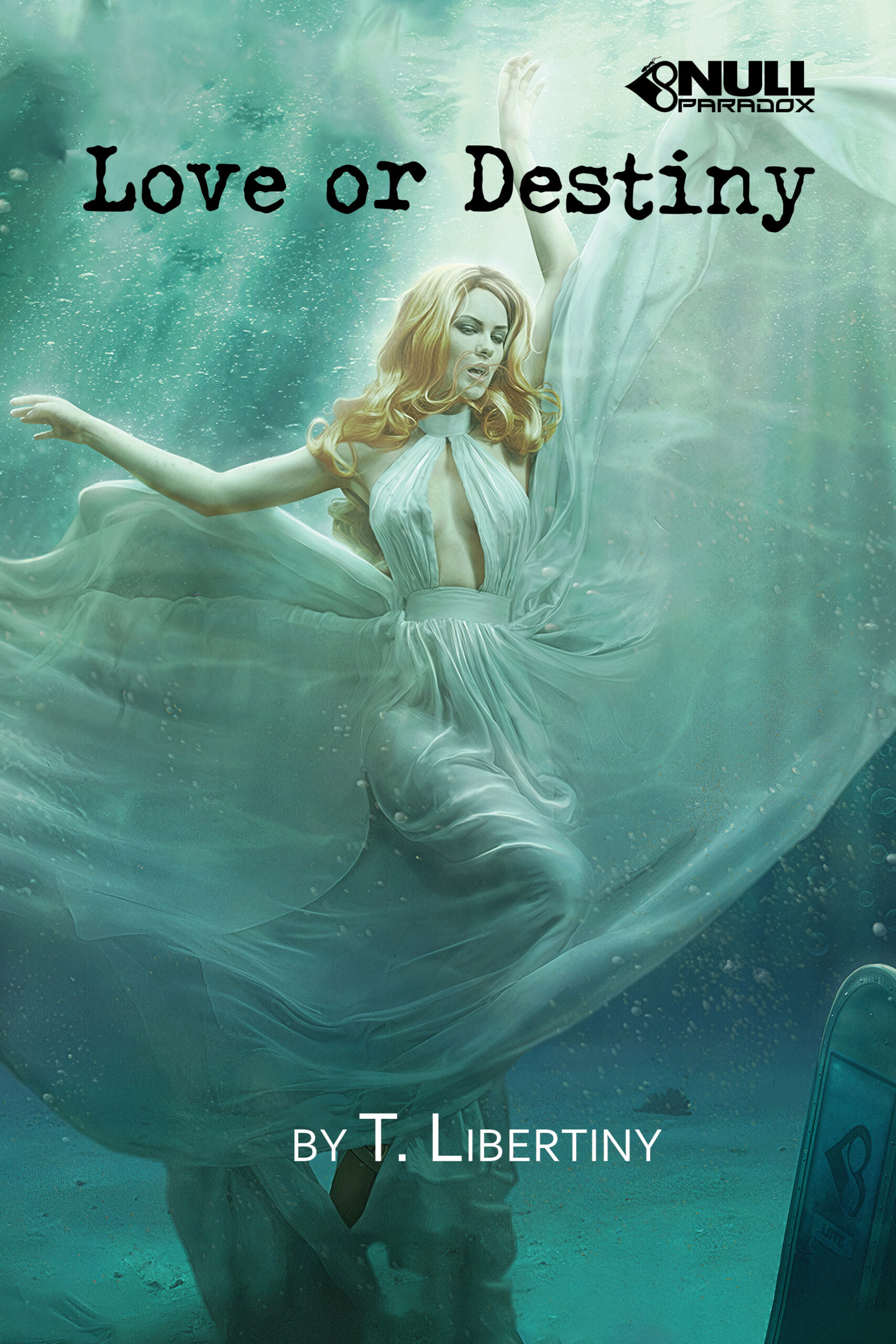
Then I realized, I had the answer in front of me. I had already released a nine-song music album called Love or Destiny. It was an album filled with songs that added to the book and music album Gertrude & Grace.
So I wrote a nine-chapter book of the same title. It functions as an addendum to Gertrude & Grace and a bridge to Victoria & Seth.
Because I had done so much work on writing the music, lyrics, and book Victoria & Seth, writing the book Love or Destiny was measured in months instead of years.
For example: I moved everything related to the character of Julie out of Victoria & Seth and into Love or Destiny. I didn’t want to fall into the trap of too many characters, not enough character development and depth.
The problem with Julie was competing space and loss of focus. Victoria & Seth is about those two key characters and the inclusion of Julie’s growth as a person diluted the main story.
Messy
Derek Sivers, founder of CD Baby, once gave a talk about what we now call working fast and breaking things. It’s that the willingness to crank out work and discard it quickly has its merits. It’s not how I naturally do things. Normally I take a long time with both music and books. With Love or Destiny the faster discards worked.
For me, the irony is that I work really hard to give readers and listeners a very polished production. That’s still important and will continue.
Did Grace actually die? Originally, being the physics geek, she was going to be in an entanglement state (Schrödinger’s cat), neither dead or alive. While I personally love the ramifications of the cat story, it’s been done to death. With regret, that storyline ended.
Love or Destiny
Limited edition hardcover available on 2026 December 2.
READY TO EXPLORE THE FULL PROCESS?
Join our community on Patreon for complete articles, creative process breakdowns, minimalist frameworks, and downloadable tools — including reusable templates and behind-the-scenes access.